Multiplier Pathways Connecting Game Studio Designs with Instant Payout Networks in Mobile Live Settings
Iris Krause · Sep 14, 2026
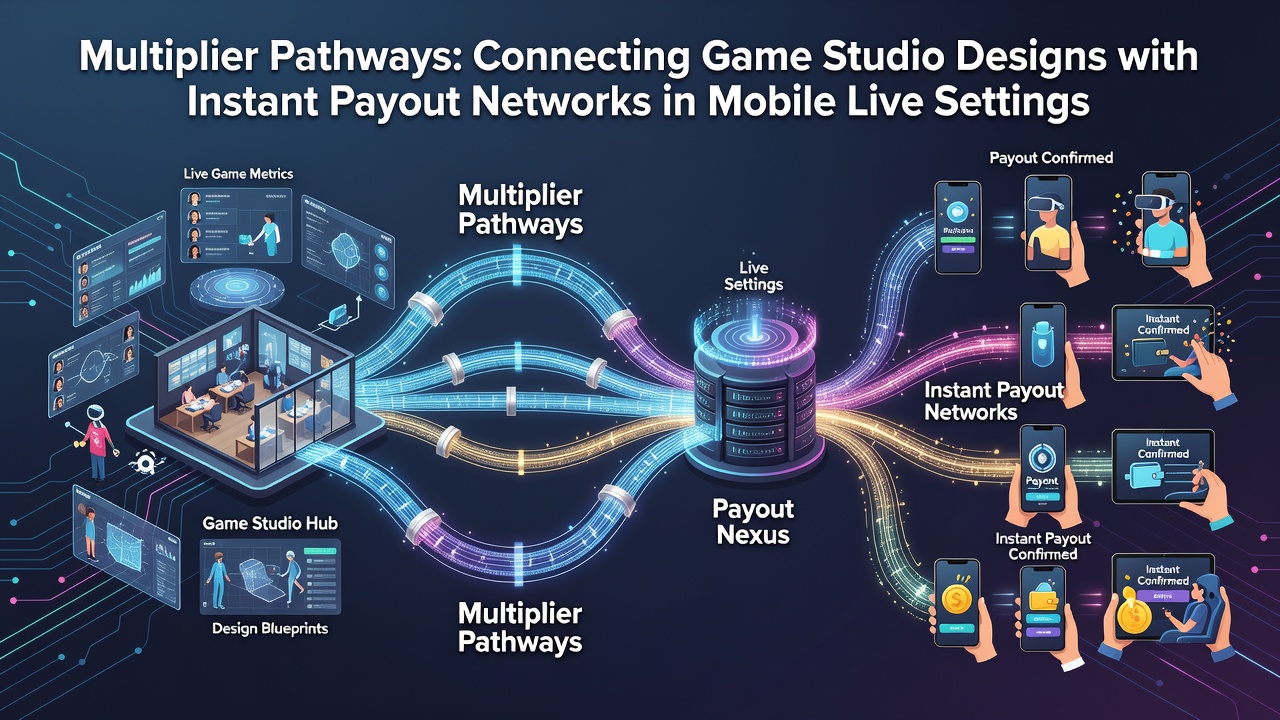
Multiplier Pathways Connecting Game Studio Designs with Instant Payout Networks in Mobile Live Settings
Game studios have developed multiplier systems that feed directly into payout mechanisms across mobile platforms, creating seamless connections between live dealer sessions and real-time reward distribution. These pathways rely on integrated APIs that transmit multiplier data from reel and table games straight to payment processors while users remain in portable sessions. Research indicates that such designs allow multipliers calculated during live play to trigger instant credit adjustments without interrupting the mobile interface.
Technical Foundations of Multiplier Integration
Studios construct multiplier frameworks using modular code that links bonus triggers to network endpoints managed by payment providers. In mobile live settings this means a multiplier activated during a dealer interaction updates the user's balance through encrypted channels that comply with regional data standards. Observers note that the architecture often incorporates event-driven scripts where live game outcomes feed multiplier values into payout queues maintained by third-party networks. Data shows these connections reduce processing times from minutes to seconds in environments where users switch between portrait and landscape modes on handheld devices.
Engineers at multiple studios have implemented layered verification steps that confirm multiplier validity before any funds move through the instant network. This process involves cross-referencing game logs with payout requests while the mobile session continues uninterrupted. Studies conducted by research institutions reveal that such layered checks maintain integrity across different operating systems used in portable gaming.
Role of Instant Payout Networks in Live Mobile Contexts
Instant payout networks operate as intermediaries that receive multiplier signals from game servers and execute credit transfers to user accounts hosted on mobile wallets. In live dealer formats these networks handle variable multiplier amounts generated during real-time interactions such as card draws or wheel spins. According to reports from the Australian Institute of Criminology, transaction volumes involving multiplier-linked payouts have grown steadily as mobile live formats expand in regulated markets.
Network protocols prioritize low-latency routing so that a multiplier earned in a portable session appears as available funds within the same minute. This requires constant synchronization between studio servers and payout gateways that support multiple currencies and regional banking rails. Those who monitor industry data find that mobile-optimized networks incorporate fallback routes when primary connections experience delays during peak live gaming hours.

Design Patterns Across Game Studios
Studios employ distinct design patterns to embed multiplier pathways into both reel-based and table-based mobile titles. One common approach uses persistent state objects that carry multiplier values from the game engine into the payout API call. Another pattern relies on event listeners that detect live multiplier events and forward them to the network endpoint without requiring additional user input. Research from the University of Nevada, Reno, documents how these patterns adapt to different screen sizes and touch interfaces common in mobile environments.
Live settings add complexity because multipliers often derive from dynamic elements such as community bets or dealer actions that occur in real time. Designers therefore build redundancy into the pathways so that a dropped mobile connection does not lose the multiplier data before it reaches the payout network. Observers have recorded cases where studios updated their integration layers in September 2026 to accommodate new security tokens required by certain payment providers operating in European markets.
Regulatory and Operational Considerations
Operators must align multiplier pathways with licensing requirements that govern both game fairness and financial transactions in mobile channels. Compliance teams review how multiplier calculations interface with payout networks to ensure audit trails remain intact across jurisdictions. Figures from the Canadian Centre for Gaming Research indicate that documented pathways help operators demonstrate transparent reward distribution during regulatory reviews.
Security measures include tokenization of multiplier values and end-to-end encryption between studio servers and payout endpoints. These steps protect user data while the mobile live session remains active. Industry organizations continue to publish guidelines that standardize communication protocols used in such integrations, allowing studios and networks to maintain compatibility across device fleets.
Conclusion
Multiplier pathways represent a technical bridge between creative game design and efficient financial infrastructure in mobile live settings. As studios refine their multiplier mechanics and networks enhance routing capabilities, the connection points continue to evolve through standardized APIs and security protocols. Ongoing developments tracked by research bodies show that these integrations support the operational needs of live mobile gaming while meeting established regulatory benchmarks across multiple regions.